
The quest to understand our place in the universe has taken a giant leap forward. NASA has officially confirmed the existence of 6,000 exoplanets – planets orbiting stars beyond our solar system. This monumental achievement builds upon decades of research, starting with the discovery of the first exoplanets orbiting a pulsar in 1992 and a main sequence star in 1995. The Kepler and TESS missions have been instrumental in this incredible surge of discoveries, dramatically accelerating the pace of exoplanet identification.
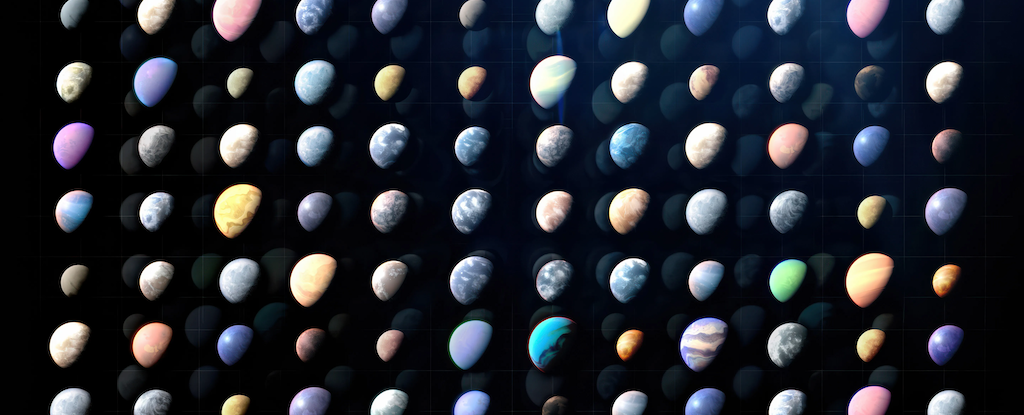
While 6,000 planets represent a significant fraction of the potentially hundreds of billions in our Milky Way galaxy alone, it's a testament to human ingenuity and scientific perseverance. Detecting these distant worlds is an immense challenge. Vast distances, the overwhelming brightness of their host stars, and the subtle nature of their gravitational influences all present significant hurdles. However, advancements in detection techniques, such as the transit method (measuring the dip in starlight as a planet passes in front of its star) and the radial velocity method (detecting the subtle wobble of a star caused by an orbiting planet), have allowed us to overcome these obstacles.
The diversity of exoplanets discovered is equally astounding. From "hot Jupiters," massive gas giants scorchingly close to their stars, to tidally locked planets with one side perpetually baked and the other frozen, the variety defies our initial conceptions of planetary systems. Some exoplanets may even rain iron or possess atmospheric densities comparable to styrofoam. This breathtaking diversity offers invaluable insights into planetary formation and evolution, providing a richer context for understanding our own solar system and the potential for habitable worlds.
The ultimate goal, however, remains the search for life beyond Earth. The discovery of biosignatures – chemical indicators of life – in exoplanet atmospheres is paramount. The James Webb Space Telescope (JWST), with its advanced infrared capabilities, is leading the charge in this area, although conclusive evidence remains elusive. Future missions, such as the proposed Habitable Worlds Observatory, are specifically designed to search for Earth-like planets in habitable zones around sun-like stars, greatly enhancing our chances of finding life elsewhere.
This milestone is not an end, but a springboard for further exploration. With ongoing missions like TESS, the upcoming Nancy Grace Roman Space Telescope, and international collaborations like China's Earth 2.0 mission, the coming decades promise an even greater influx of exoplanet discoveries. The sheer number of candidate planets awaiting confirmation highlights the vastness of the unknown and the incredible potential for future breakthroughs in our understanding of the universe and our place within it.
---
Originally published at: https://www.sciencealert.com/nasa-confirms-6000-planets-beyond-our-solar-system-discovered


