
A groundbreaking paleontological discovery in Mongolia has unveiled the oldest and most complete fossil of a pachycephalosaur, a group of dinosaurs renowned for their distinctive dome-shaped skulls. This remarkable find, detailed in a recent Nature study, significantly advances our understanding of these enigmatic creatures.
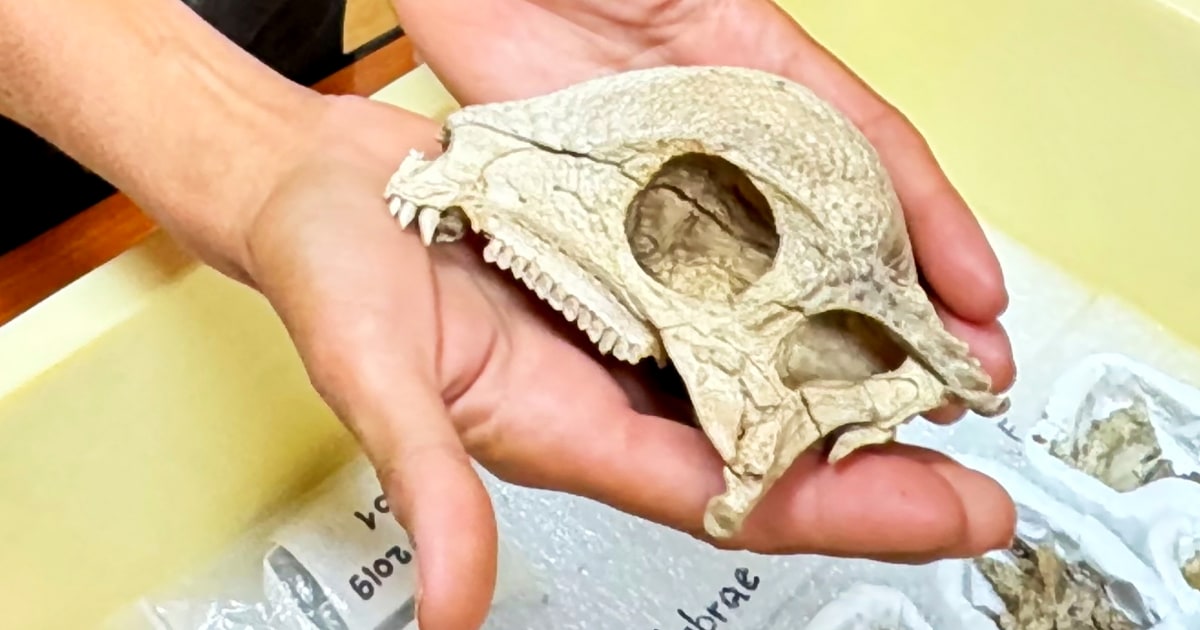
The exceptionally well-preserved fossil, belonging to a juvenile from a previously unknown species named *Zavacephale rinpoche*, dates back an impressive 108 to 115 million years. Unearthed in the Khuren Dukh formation of the Gobi Desert by a team led by paleontologist Tsogtbaatar Chinzorig of the Mongolian Academy of Sciences, this specimen represents a major leap forward in pachycephalosaur research.
Prior to this discovery, knowledge of pachycephalosaurs – two-legged herbivores inhabiting Asia and North America during the Cretaceous Period – was severely limited, with most previously discovered fossils consisting solely of skulls. As Michael Pittman, a paleobiologist from the Chinese University of Hong Kong, notes, the global collection of pachycephalosaur fossils could easily fit into a couple of bathtubs. The *Zavacephale rinpoche* fossil, however, is exceptionally complete, offering unprecedented insight into the dinosaur's skeletal structure.
The nearly 3-foot-long juvenile, estimated to be at least two years old, reveals a wealth of anatomical detail. More than half of its skeleton has been recovered, including long legs, short arms, small hands, and gastroliths – stones swallowed to aid in digestion. Remarkably, even at this young age, the characteristic thickened bone on the skull's top was already present. This completeness is crucial for understanding the developmental process of the iconic pachycephalosaur dome.
This discovery also pushes back the known timeline for pachycephalosaur existence by approximately 15 million years. The fossil's age provides invaluable data on the evolution of these dinosaurs and demonstrates that the distinctive skull dome was a feature present in early species. While the exact purpose of the dome remains a subject of ongoing debate, hypotheses include use in head-butting contests or as a display feature for attracting mates. The *Zavacephale rinpoche* fossil, a treasure trove of paleontological information, represents a significant step towards unraveling the mysteries surrounding these fascinating creatures. Its size was comparatively smaller than later pachycephalosaurs, which could reach lengths of around 14 feet.
---
Originally published at: https://www.nbcnews.com/world/asia/oldest-complete-fossil-dome-headed-dinosaur-found-mongolia-rcna232070


