
The James Webb Space Telescope (JWST), a marvel of modern engineering, may have achieved one of its most anticipated objectives: the potential detection of an atmosphere on an Earth-sized exoplanet within its star's habitable zone. This groundbreaking revelation significantly advances humanity's quest to find signs of life beyond our solar system.
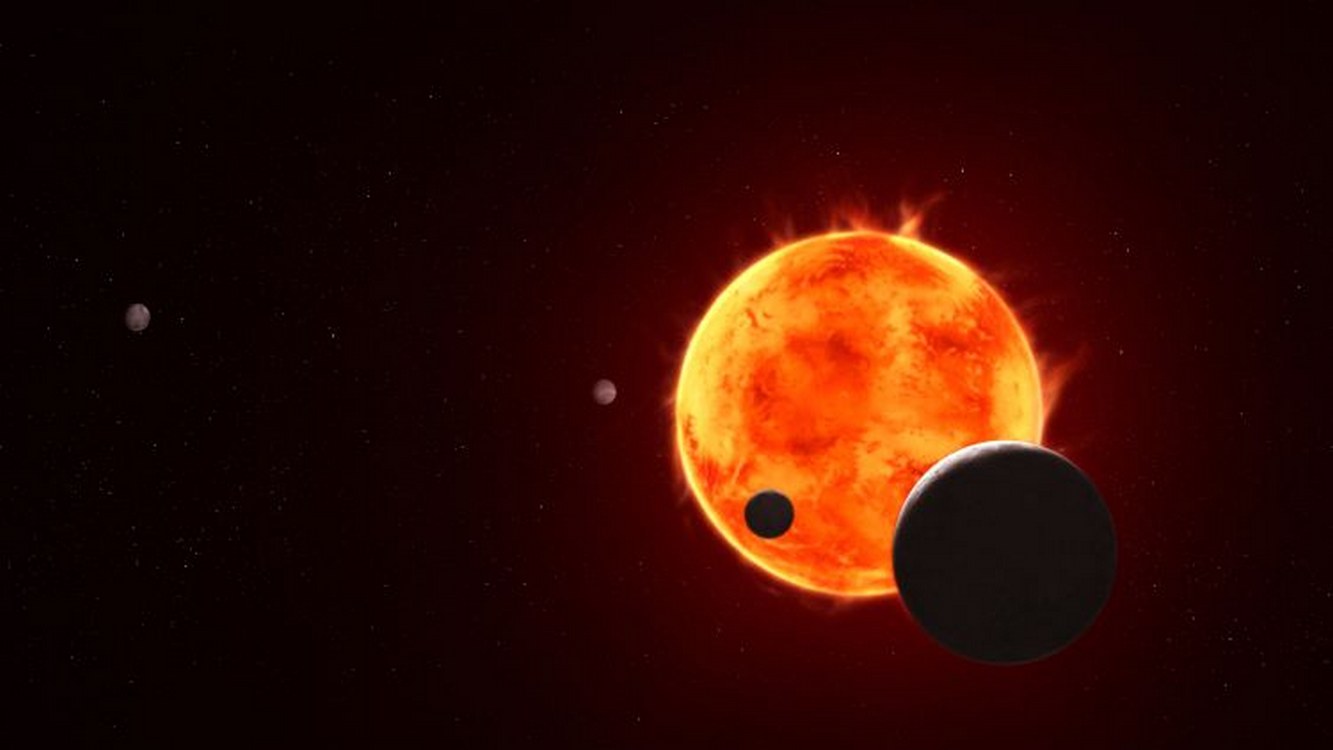
Recent pioneering research from the University of St. Andrews, detailed in two papers published in the Astrophysical Journal Letters, focuses on TRAPPIST-1e. This exoplanet, located a mere 40 light-years away within the well-known TRAPPIST-1 red dwarf star system, is particularly intriguing. Scientists hypothesize that conditions on TRAPPIST-1e could support liquid water – perhaps a global ocean or vast icy expanses – but only if it possesses an atmosphere.
Initial observations from JWST suggest several plausible scenarios, including the compelling possibility of an atmosphere enveloping TRAPPIST-1e. Such a discovery would represent a monumental step in the search for extraterrestrial habitability, as an atmosphere provides critical indicators for potential metabolic activity. As Dr. Ryan MacDonald, Lecturer in Extrasolar Planets at St. Andrews, emphasizes, "TRAPPIST-1e has long been considered one of the best habitable zone planets to search for an atmosphere."
However, the journey to this potential discovery was not without hurdles. Dr. MacDonald's team initially faced significant data contamination from the red dwarf star itself, making the atmospheric search exceptionally challenging. To overcome this, researchers meticulously aimed JWST’s potent NIRSpec (Near-Infrared Spectrograph) instrument at the system. By analyzing how starlight is absorbed as it passes through the exoplanet's potential atmosphere, astronomers can discern the chemical composition. The team dedicated over a year to rigorously correcting the data before pinpointing the atmospheric signals.
Despite the meticulous work, the initial findings present "two possible explanations," according to Dr. MacDonald. The most thrilling prospect is a "secondary atmosphere" composed of heavier gases like nitrogen. However, the data does not yet conclusively rule out a "bare rock with no atmosphere." Scientists are not deterred; they are actively gathering additional JWST observations of TRAPPIST-1e. Each subsequent transit of the planet across its star will provide clearer data, allowing for a deeper investigation into its atmospheric contents. Dr. MacDonald expressed immense optimism, stating, "In the coming years we will go from four JWST observations of TRAPPIST-1e to nearly twenty... we finally have the telescope and tools to search for habitable conditions in other star systems, which makes today one of the most exciting times for astronomy." The ongoing efforts promise to refine our understanding of this distant world and push the boundaries of astrobiological exploration.
---
Originally published at: https://www.goodnewsnetwork.org/james-webb-space-telescopes-first-look-at-an-atmosphere-on-habitable-zone-exoplanet/


