
French President Emmanuel Macron has appointed Sébastien Lecornu as the new Prime Minister, following the ousting of François Bayrou after a failed vote of confidence. Lecornu, a 39-year-old close ally of Macron and former Minister of the Armed Forces, faces significant challenges as he takes the helm of a minority government.
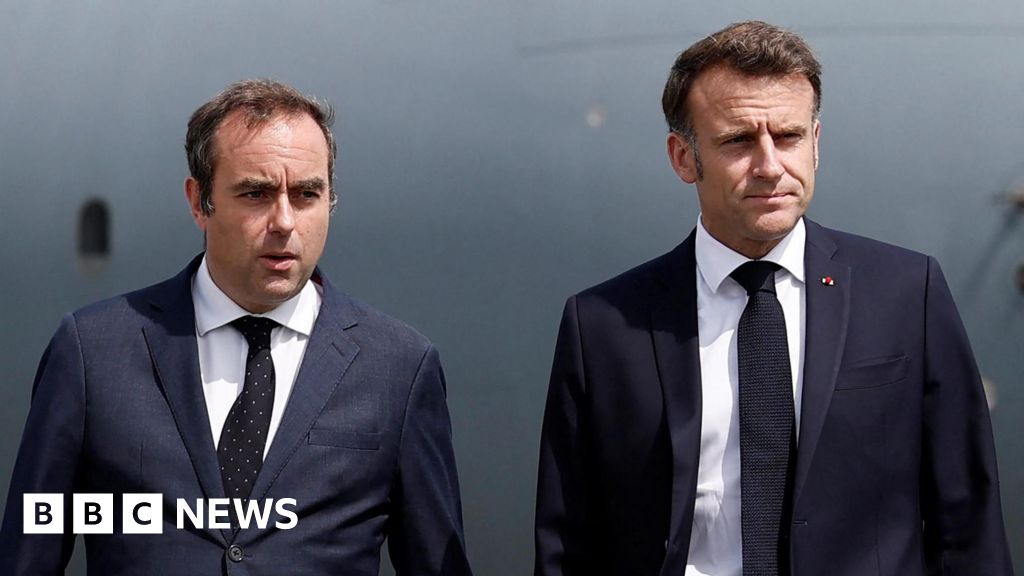
His appointment, the seventh Prime Minister under Macron's presidency, comes amidst a backdrop of political division and a looming economic crisis. The previous government's proposed budget cuts, totaling €44 billion, were rejected by the National Assembly, leading to Bayrou's resignation. This rejection highlighted the deep divisions within the French political landscape, with the left and far-right factions united in their opposition.
Lecornu's immediate priority is navigating France's substantial public debt, which has reached €3.3 trillion—representing 114% of the country's GDP. He has pledged to build a government focused on defending French independence, serving the French people, and ensuring political stability. However, his appointment has been met with mixed reactions.
While centrist allies have expressed support and called for compromise, the far-left and far-right have voiced strong opposition. Jean-Luc Mélenchon of France Unbowed called for Macron's resignation, while Marine Le Pen described the appointment as Macron's 'last shot' from within his inner circle. The Socialist party, despite initial offers of cooperation, were ultimately not included in the new government.
The appointment also occurs against a backdrop of ongoing political instability. France's hung parliament, resulting from snap elections last year, has created a three-bloc system—left, far-right, and center—making governing extremely difficult. Furthermore, the situation is compounded by the planning of large-scale anti-government protests and an upcoming credit rating reassessment by Fitch, which could further impact France's already strained financial situation. The new Prime Minister faces a monumental task in achieving political stability and economic recovery.
---
Originally published at: https://www.bbc.com/news/articles/crmenp1k0mjo


