
A groundbreaking reanalysis of a million-year-old skull, known as Yunxian 2, unearthed in China's Hubei province in 1990, is challenging long-held beliefs about human evolution. Initially classified as Homo erectus, sophisticated digital reconstruction techniques, including advanced CT imaging and high-resolution surface scanning, have revealed a surprising new interpretation. The skull's morphology, particularly its braincase size and jaw structure, suggests a closer relationship to Homo longi, a species closely linked to the enigmatic Denisovans.
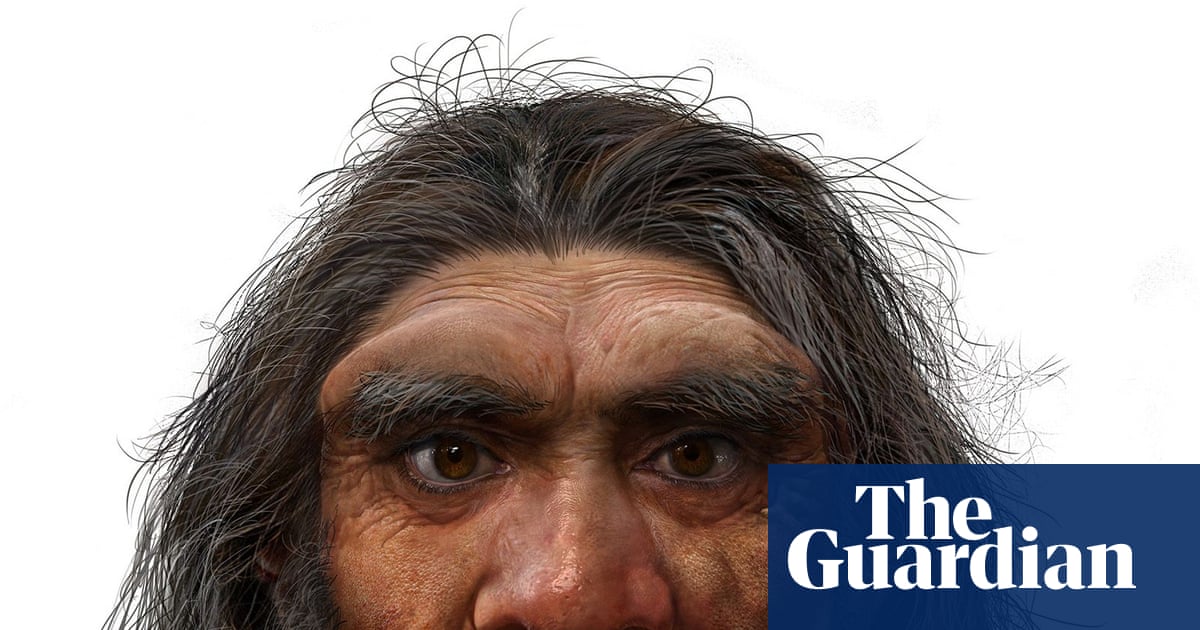
This reclassification has profound implications. It positions the Yunxian 2 skull as the closest known fossil to the evolutionary split between modern humans (Homo sapiens), Neanderthals, and Denisovans. This pushes back the timing of this critical divergence by at least 400,000 years, potentially doubling the estimated origin time of Homo sapiens. Furthermore, leading experts, such as Professor Chris Stringer of the Natural History Museum in London, suggest this discovery raises the tantalizing possibility that the common ancestor of these groups – and perhaps even the earliest Homo sapiens – originated in Western Asia rather than Africa.
The research, published in Science, supports a model of five major branches of large-brained humans evolving over the past 800,000 years: Asian erectus, heidelbergensis, sapiens, Neanderthals, and Homo longi (encompassing the Denisovans). This study aims to resolve the long-standing "muddle in the middle" – the complex array of human fossils from between 1 million and 300,000 years ago that has baffled paleoanthropologists for decades.
While these findings offer a compelling new narrative, they also challenge some recent genetic analyses based on modern human and ancient DNA comparisons. Dr. Frido Welker, an associate professor at the University of Copenhagen, emphasizes the need for further corroboration through additional fossil discoveries and genetic evidence. Molecular data from the Yunxian 2 specimen itself could offer critical insights to confirm or refute the morphological interpretations presented in this landmark study. The debate is sure to continue, sparking exciting new avenues for research into the complex and fascinating story of human origins.
---
Originally published at: https://www.theguardian.com/science/2025/sep/25/study-of-1m-year-old-skull-points-to-earlier-origins-of-modern-humans


