
The year is 2025. A decade has passed since the Laser Interferometer Gravitational-Wave Observatory (LIGO) made history with its groundbreaking detection of gravitational waves, ripples in spacetime predicted by Einstein's theory of general relativity. This monumental achievement, confirmed on September 14, 2015, with the signal GW150914, has opened a new era in astronomy, allowing scientists to 'hear' the universe's most cataclysmic events.
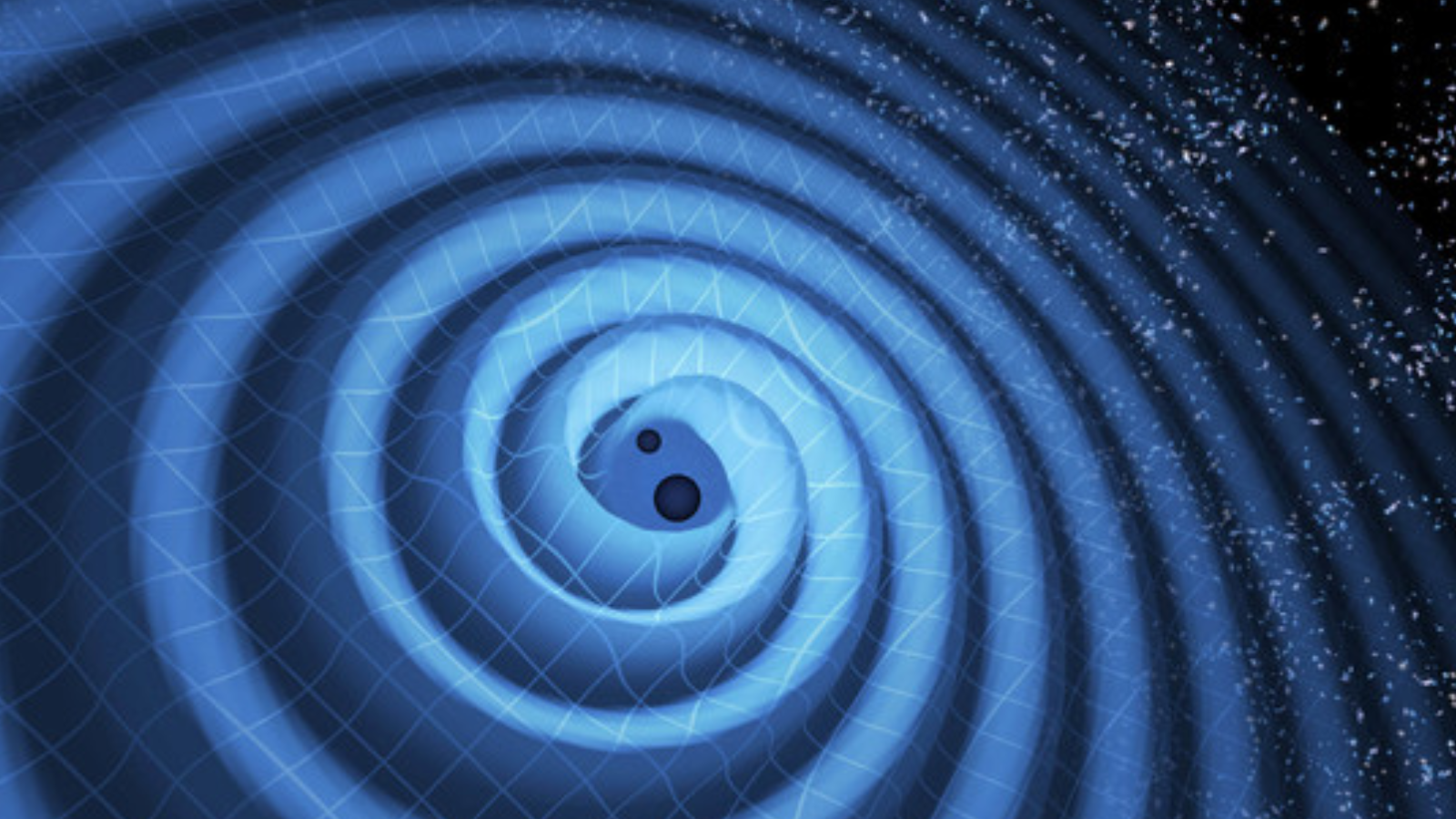
Since then, LIGO, joined by Virgo and KAGRA, has detected over 300 gravitational wave signals, revealing a wealth of information about the cosmos. These instruments are so precise they can measure spacetime distortions a fraction of a proton's width—a testament to human ingenuity and scientific progress.
Among the most significant discoveries are the detections of mergers between black holes of unprecedented mass, like GW231123, involving black holes 100 and 140 times the mass of our sun. This event challenged existing models of black hole formation, suggesting the possibility of previous mergers contributing to such colossal objects. Further research into these massive mergers offers potential insights into the life cycle and evolution of black holes.
Another pivotal moment was the detection of GW170817, the first observation of gravitational waves from a neutron star collision. This event not only confirmed the theory behind heavy element creation (like gold and platinum) but also launched the era of multi-messenger astronomy, combining gravitational wave data with electromagnetic observations. This confirmed the association of these events with kilonovae, and dramatically expanded our understanding of these violent stellar events.
The observation of the ringdown phase of black hole mergers, notably GW190521, provided precise measurements of the resulting black hole's mass and spin, serving as a rigorous test of Einstein's theory and the 'no-hair' theorem. The detection of multiple vibration frequencies was a surprising development, exceeding initial expectations of the technology's capabilities.
The detection of neutron star-black hole mergers (GW200105_162426 and GW200115_042309), often called 'mixed mergers', further enriched our understanding of binary systems, filling in a missing piece of the puzzle in stellar evolution. These events are as intriguing as the elusive nature of GW190814, where the mass of one object lay between that of neutron stars and black holes, making its true identity the subject of ongoing research.
Adding to the excitement, GW250114, a remarkably clear gravitational wave signal, not only reinforced general relativity but also validated predictions made by Stephen Hawking about black hole mergers and event horizons. It underscores the advancements made in detector technology over the last decade.
Beyond LIGO's achievements, the North American Nanohertz Observatory for Gravitational Waves (NANOGrav) detected low-frequency gravitational waves, emanating from a chorus of supermassive black hole mergers in the early universe. This long-wavelength observation provides a completely different view of the universe, complementing the more immediate and intense signals detected by LIGO and its collaborators.
The past decade's gravitational wave discoveries have not only confirmed Einstein's theories but have also unexpectedly revealed limitations, prompting new questions and avenues of research. The journey into the gravitational universe is far from over; future observations promise to reveal even more profound insights into the cosmos.
---
Originally published at: https://www.space.com/astronomy/ligo-legacy-10-incredible-gravitational-wave-breakthroughs-to-celebrate-observatorys-landmark-2015-find


