
The search for extraterrestrial life has taken a significant leap forward with new research suggesting the possibility of an atmosphere on TRAPPIST-1e, an Earth-sized planet orbiting a star 40 light-years away. Two studies published in the Astrophysical Journal Letters, utilizing data from NASA's James Webb Space Telescope, indicate that this exoplanet, part of the seven-planet TRAPPIST-1 system, may possess a nitrogen-rich atmosphere, similar to Earth's. While further investigation is crucial to confirm these findings, the implication is profound. The presence of an atmosphere significantly increases the chances of liquid water existing on the planet's surface – a key ingredient for life as we know it.
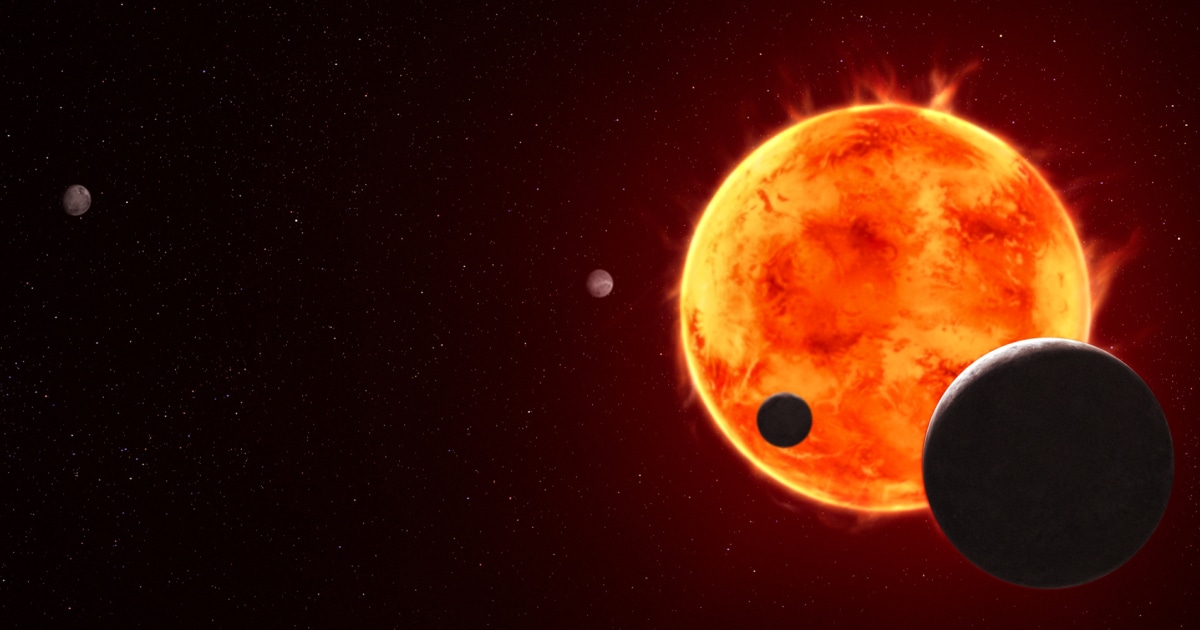
The studies observed four transits of TRAPPIST-1e – instances when the planet passed in front of its star. By analyzing how the exoplanet absorbed starlight, scientists sought to identify atmospheric components. The absence of significant hydrogen or carbon dioxide suggests an atmosphere differing from some other celestial bodies. However, the data hints at a nitrogen-rich composition, an exciting possibility given Earth's nitrogen-rich atmosphere and its importance in supporting life.
This research builds upon previous studies of the TRAPPIST-1 system, which has been a focal point in the search for habitable worlds. TRAPPIST-1e's location within its star's habitable zone – a region where temperatures could permit liquid water – further enhances its potential for supporting life. The James Webb Space Telescope's ability to detect subtle changes in starlight during transits is a critical tool in this research; the variations in light absorption act like a spectral fingerprint, revealing the composition of the planet's surrounding gases.
Despite this promising development, significant challenges remain. The TRAPPIST-1 star is unusually active, creating substantial background noise that researchers must carefully filter out to accurately interpret the data. Furthermore, to solidify the evidence of an atmosphere, more observations are necessary. Scientists plan to monitor TRAPPIST-1e during fifteen additional transits over the coming years. Further studies are also planned for other planets in the TRAPPIST-1 system (1f, 1g, and 1h). This ongoing investigation represents a crucial step in our quest to understand exoplanets and the potential for life beyond our solar system. While the presence of a nitrogen-rich atmosphere is a compelling sign, confirming the existence of an atmosphere and ultimately the possibility of life on TRAPPIST-1e requires much more data and rigorous analysis.
---
Originally published at: https://www.nbcnews.com/science/space/trappist1e-atmosphere-extraterrestrial-life-planet-earth-conditions-rcna229839


