
President Trump's administration faced a stark juxtaposition of its economic and immigration policies following a large-scale immigration raid at a Georgia construction site for a Hyundai electric vehicle battery plant. This incident occurred amidst ongoing negotiations with South Korea, aiming to secure a substantial $350 billion investment commitment. The raid, resulting in the arrests of nearly 500 workers – over 300 of whom were South Korean nationals – sparked immediate concerns in Seoul and raised questions about the potential impact on the broader trade deal and economic growth.
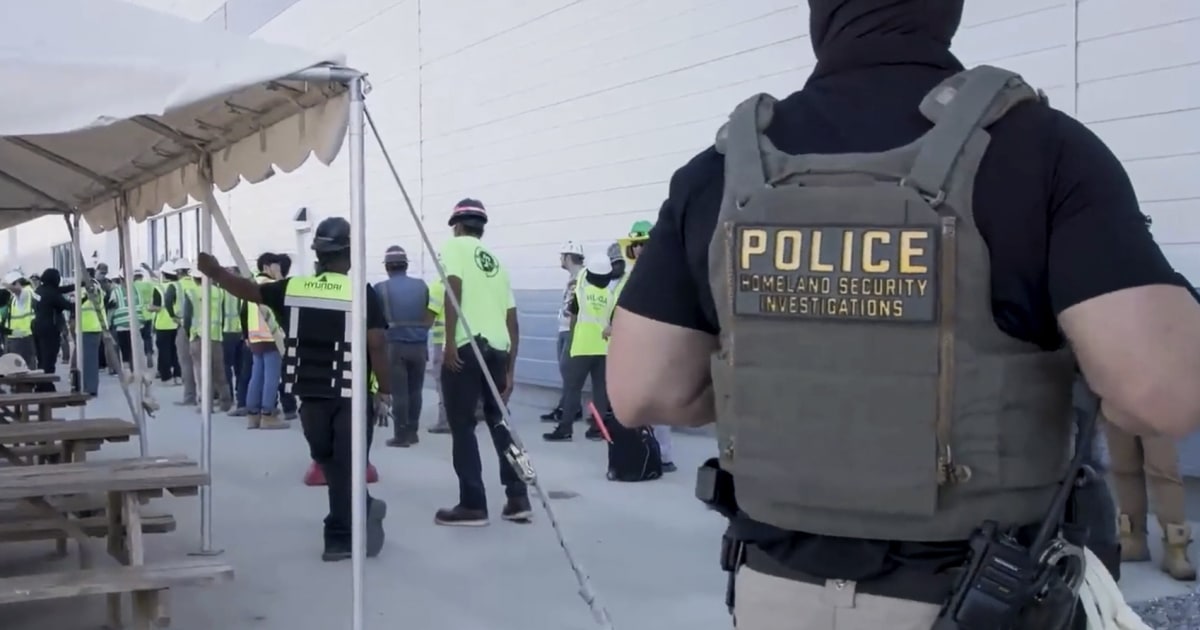
Hyundai, while asserting its commitment to legal compliance and clarifying that none of the detained workers were directly employed by the company, found itself caught in the crossfire. The incident raised serious questions for the South Korean government and Hyundai's joint venture partner, LG Energy Solution, who reportedly delayed production start until at least the first half of 2026, citing the raid's impact on operations. South Korean Foreign Minister Cho Hyu underscored the potential economic repercussions of project delays, highlighting the significant losses the United States might also face.
President Trump, however, downplayed any negative impact on US-South Korean relations, asserting their relationship remained strong. He subsequently issued a statement on Truth Social encouraging foreign investment but stressing the importance of legal compliance. This statement came against the backdrop of numerous other large-scale projects, including semiconductor factories and pharmaceutical plants, which also rely on foreign expertise and labor, raising concerns about potential future conflicts between immigration enforcement and economic growth.
While Immigration and Customs Enforcement (ICE) defended the raid as an effort to ensure fair business practices and worker protection, the action sparked criticism from various sectors. Similar ICE operations targeting workplaces across the country in previous months resulted in complaints from businesses citing the loss of reliable, long-term employees. The agricultural sector, already facing challenges from Trump's tariff policies, voiced concerns about these raids and their impact on the labor supply.
The conflicting nature of the administration's policies came into sharp focus. A slowdown in jobs growth reported by the Labor Department, coupled with the decrease in foreign-born workers, further fueled concerns about the economic effects of strict immigration enforcement. Economists from Wells Fargo and EY noted the potential restraining effect of tighter immigration policies on labor supply. President Trump later acknowledged the need for visas to attract skilled foreign workers for specialized industries, indicating a potential shift in policy. However, the impact of the raid and the ongoing tension between economic incentives and immigration enforcement on the long-term success of the Hyundai project and similar ventures remain to be seen.
---
Originally published at: https://www.nbcnews.com/business/economy/trump-trade-immigration-agendas-collide-hyundai-raid-rcna229890


