
Northrop Grumman's newly upgraded Cygnus XL spacecraft has successfully launched, marking a significant milestone in space cargo transportation. This record-breaking resupply mission, NG-23, launched atop a SpaceX Falcon 9 rocket and delivered a staggering 10,827 pounds (4,911 kilograms) of essential cargo to the International Space Station (ISS). This surpasses all previous commercial resupply missions, significantly boosting the ISS's capacity. The increased payload capacity is a direct result of the Cygnus XL's larger pressurized cargo module, which is 5.2 feet (1.6 meters) longer than its predecessors. This increase represents a 33 percent boost in overall cargo volume, effectively equivalent to two and a half minivans, according to Northrop Grumman's vice president of civil space systems, Ryan Tintner. The expanded capacity allows for the delivery of a greater quantity of scientific research equipment and essential supplies, driving down the cost per kilogram for NASA.
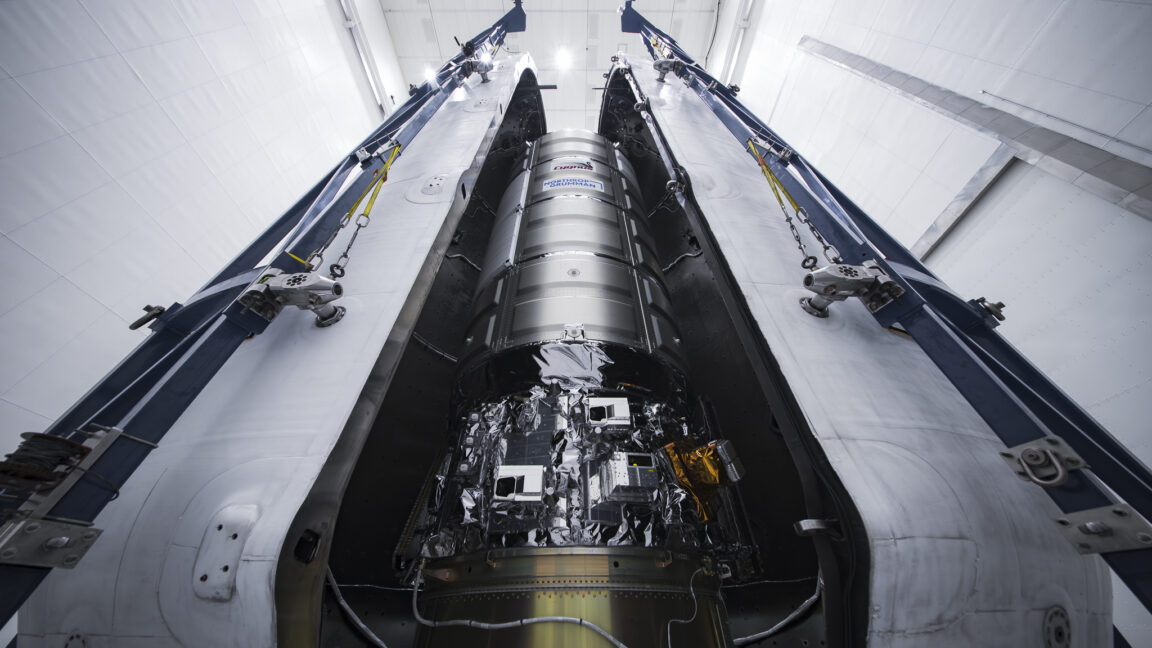
The Cygnus XL spacecraft, boasting distinctive circular solar arrays and its sizable cargo module, arrived at the ISS on Wednesday, where NASA astronaut Jonny Kim skillfully used the station's robotic arm to secure it. The mission's cargo includes vital consumables such as oxygen, nitrogen, food, and critical spare parts, including components for the ISS's urine processor, addressing recent shortages. Among the scientific experiments onboard is a project to enhance the insulation of cryogenic propellant tanks and a test of TransAstra's inflatable 'capture bag' system designed for space debris removal.
This mission also highlights the evolving dynamics of space logistics. Originally intended for launch on Northrop Grumman's Antares rocket, geopolitical challenges stemming from the war in Ukraine disrupted the supply of Russian-made engines and Ukrainian-built boosters, forcing a reliance on SpaceX's Falcon 9. While this necessitated a shift in launch providers and added costs for Northrop Grumman, it ironically allowed for the successful deployment of the heavier Cygnus XL, surpassing even the capabilities of SpaceX's Dragon cargo ship. This is due to the Cygnus' design, which prioritizes maximum cargo capacity and utilizes a larger hatch for easier unloading, without the need for a return capsule like Dragon, maximizing efficiency.
The collaboration with SpaceX is temporary. Northrop Grumman is actively developing the Antares 330, a new rocket with all-American components, projected for launch in late 2026. Until then, a fourth Falcon 9 launch has been secured to ensure the continuity of ISS resupply missions, while highlighting the advantages of leveraging the Falcon 9's enhanced payload capacity for the Cygnus XL.
The successful NG-23 mission underscores the importance of collaboration and adaptability within the space industry, while showcasing Northrop Grumman's commitment to delivering vital supplies and research capabilities to the ISS, further solidifying its position as a key player in space exploration and cargo transport.
---
Originally published at: https://arstechnica.com/space/2025/09/northrop-grummans-new-spacecraft-is-a-real-chonker/


