
The US stock market has experienced a remarkable $14 trillion rally, pushing indices to record highs. However, this surge faces a critical juncture as investors anxiously await the Federal Reserve's (Fed) decision on interest rates next week. A 25-basis-point reduction is widely anticipated, mirroring past instances where rate cuts have spurred significant market growth. Historically, the S&P 500 has seen an average 15% increase a year after rate cuts resumed following a six-month pause, exceeding the 12% gain observed after initial cuts in regular cycles. This historical data, sourced from Ned Davis Research, provides a bullish outlook for many investors.
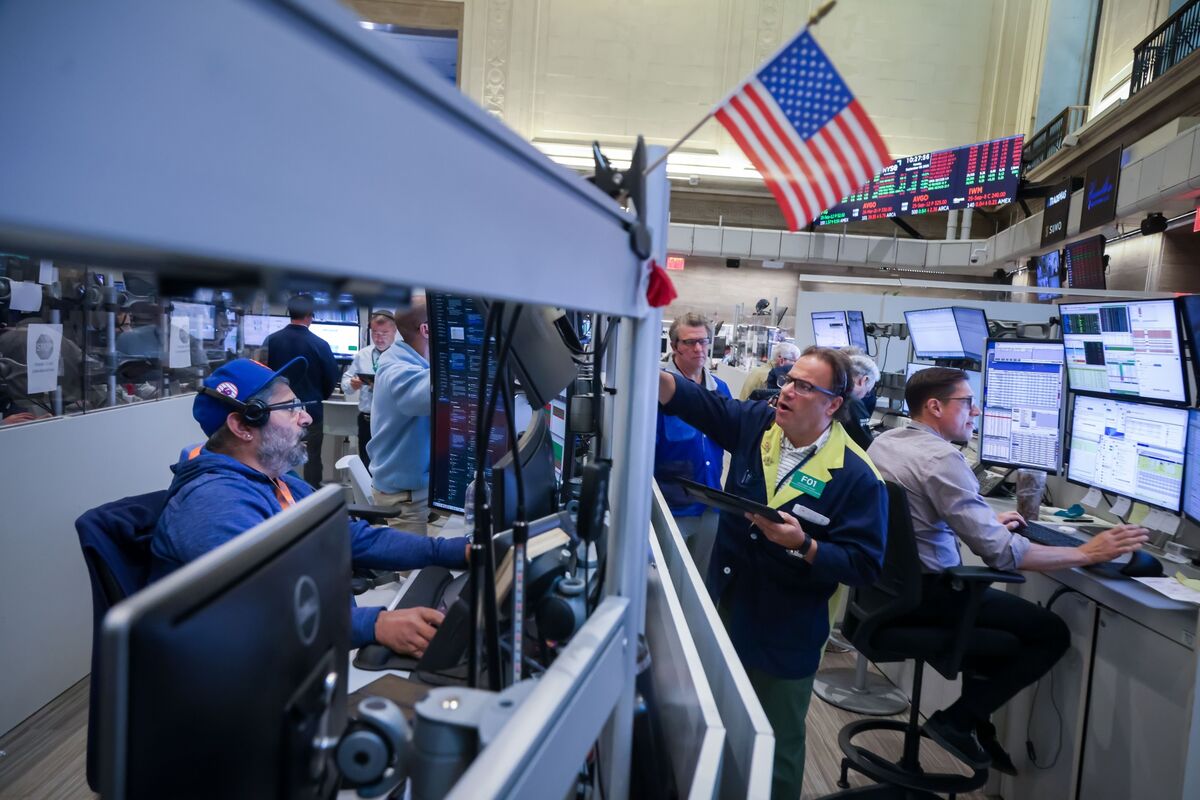
Despite the positive historical trends, concerns remain about the Fed's response to a potential economic slowdown. While current growth remains relatively robust and corporate profits healthy, recent data points, such as rising unemployment, raise questions about the economy's resilience. This uncertainty has prompted a diverse range of investment strategies, with some investors focusing on smaller companies, while others remain committed to the megacap stocks that have fueled the market's rise.
The upcoming Fed meeting is pivotal. Investors will closely examine the updated quarterly rate projections (the dot plot) and Chair Jerome Powell's subsequent remarks for clues on the Fed's trajectory. Market expectations are firmly set on at least a quarter-point rate cut, with roughly 150 basis points of cuts priced in for the next year. Alignment between the Fed's outlook and these expectations would be a powerful signal for continued market optimism.
The interplay between economic strength, the Fed's actions, and investor sentiment is complex. Historical data reveals that the number of rate cuts influences sector performance. In cycles with only one or two cuts, cyclical sectors like financials and industrials tend to outperform. However, when more substantial cuts are needed, suggesting a weaker economy, defensive sectors like healthcare and consumer staples historically deliver higher returns. This divergence highlights the challenges in predicting market behavior amidst economic uncertainty.
Adding to the complexity are factors like the ongoing AI-driven growth and the potential impact of tariffs on inflation. Some investors, like Stuart Katz, CIO of Robertson Stephens, are focusing on small-cap companies, believing they will benefit significantly from lower interest rates. Others, like Andrew Almeida of XY Planning Network, are targeting mid-cap stocks, citing their historical outperformance after rate cut initiations. Meanwhile, Sevasti Balafas of GoalVest Advisory remains bullish on large-cap technology companies, betting on their resilience to economic slowdown.
Ultimately, the success of this $14 trillion rally hinges on the Fed's actions, the continued strength of the AI-driven growth, and the management of inflationary pressures. The market's future trajectory will depend largely on how confidently investors navigate the balance between economic growth and the potential for a more significant slowdown.
---
Originally published at: https://www.bloomberg.com/news/articles/2025-09-13/the-14-trillion-us-stock-rally-is-seeking-a-fed-cut-playbook


