
The transition to USB-C ports on recent iPhone models marks a significant, noticeable evolution within Apple's device ecosystem. While many recall the long-standing presence of the Lightning connector – a staple for the majority of the iPhone's history following its 30-pin predecessor – this era officially concluded with its final bow in early 2025. This pivotal shift, though potentially a minor adjustment for some, was primarily driven by a compelling external mandate.
At the core of Apple's decision lies a clear directive from the European Union. The EU enacted legislation compelling a wide array of electronic devices, including smartphones, to adopt a universal charging standard. While this change might present a slight hurdle for long-time users heavily invested in Lightning accessories, it generally represents a positive advancement for the broader Apple community and the tech industry at large.
The integration of USB-C into the iPhone was a progression years in the making, despite suggestions that Apple displayed considerable reluctance throughout the process. Even if the tech giant wasn't entirely enthusiastic about the shift, it undeniably offers tangible advantages for iPhone users, facilitating quicker charging speeds and expanding compatibility with a growing range of USB-C peripherals. Historically, Apple had already begun incorporating USB-C into its broader product line, starting with iPads and MacBooks. However, the company appeared hesitant to extend this to the iPhone, often citing concerns about increased electronic waste and stifled innovation. Critics, conversely, often speculated that Apple's reluctance stemmed from potential revenue losses associated with its "Made for iPhone" (MFi) program, which licensed third-party accessory manufacturers.
In 2022, the European Parliament solidified its "common charger" directive, setting a deadline for companies until the fall of 2024. This mandate required numerous small electronic devices, including mobile phones, tablets, e-readers, and cameras, to standardize on a universal charging port. The overarching goals of this initiative were twofold: to alleviate consumer frustration from accumulating a multitude of disparate charging cables and to significantly reduce electronic waste across the continent.
Before the official unveiling, speculation abounded regarding Apple's future plans for the iPhone's charging interface. Some theories even suggested the complete removal of physical ports, favoring an exclusive wireless charging experience. Nevertheless, in September 2023, Apple preemptively introduced the iPhone 15 series, fully equipped with USB-C, effectively moving ahead of the EU's legislative deadline by approximately a year. This strategic integration quickly expanded, with the second-generation AirPods charging case also making the identical switch, meaning that Apple's flagship devices – the latest iPhones, iPads, Macs, and AirPods – now uniformly feature the versatile USB-C connector.
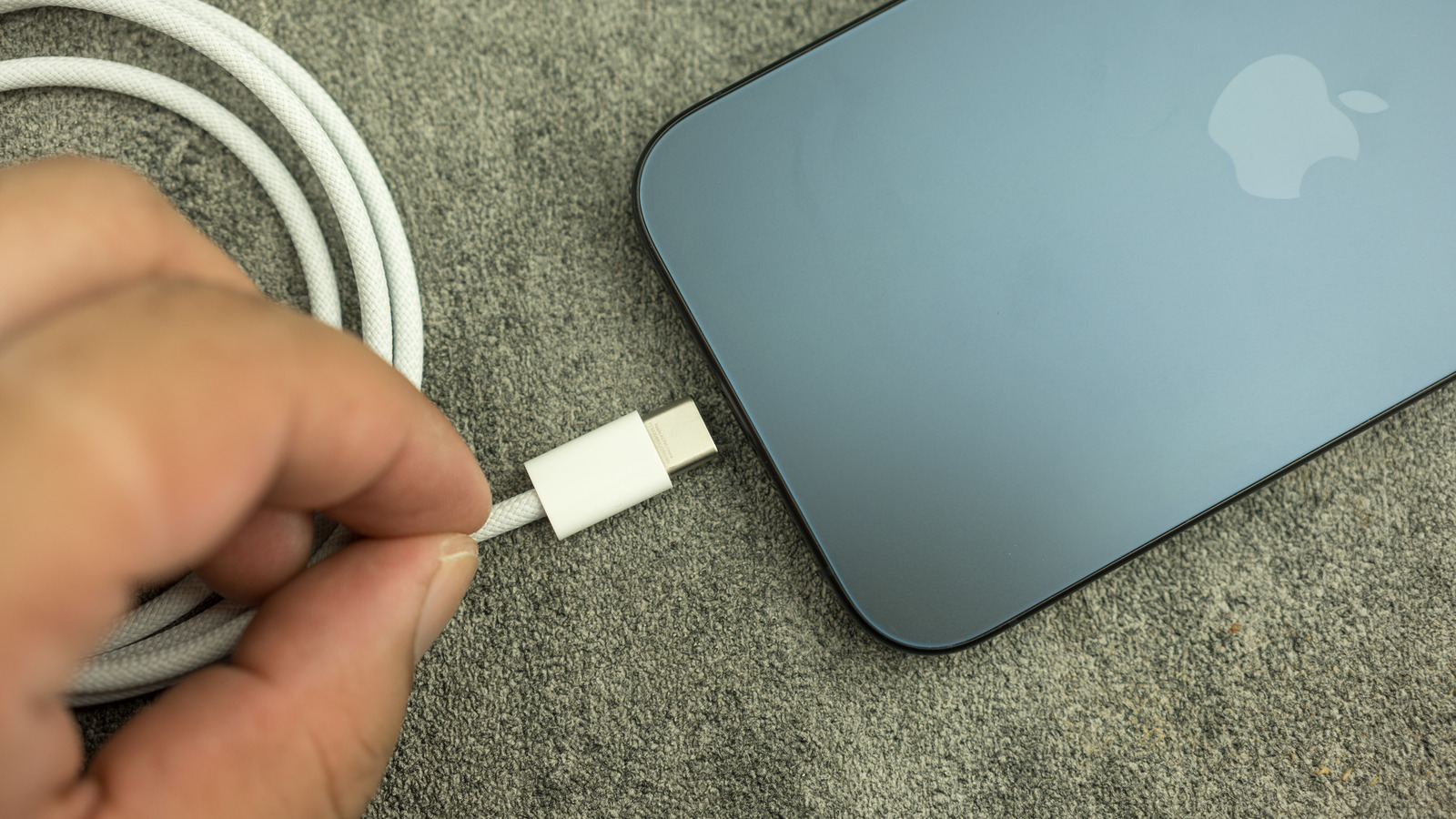
For consumers already owning a suite of USB-C compatible devices, this transition was likely seamless. However, individuals still reliant on the venerable Lightning connector must now consider upgrading their cables and accessories. To ease this transition, Apple has thoughtfully included a new braided USB-C cable with its latest iPhones. Beyond convenience, the move has brought performance enhancements; recent iPhones, such as the iPhone 17 series, now support significantly faster charging, capable of reaching 50% battery capacity in approximately 20 minutes when paired with a 40W adapter or higher. It's worth noting, however, that the USB-C port on models like the iPhone 17 and Air still operates at USB 2.0 data transfer speeds.
The once ubiquitous Lightning connector has undeniably been supplanted. For those still holding onto an iPhone featuring the Lightning port, the opportune moment to embrace the USB-C standard has arrived.
---
Originally published at: https://www.bgr.com/1978953/why-iphone-changed-lightning-usb-c-ports-explained/


