
NASA's Perseverance rover has made a groundbreaking discovery in its search for ancient life on Mars. Analysis of a core sample from the Neretva Vallis, an ancient riverbed in Jezero Crater, has revealed the presence of vivianite and greigite – two minerals strongly associated with microbial metabolism on Earth.
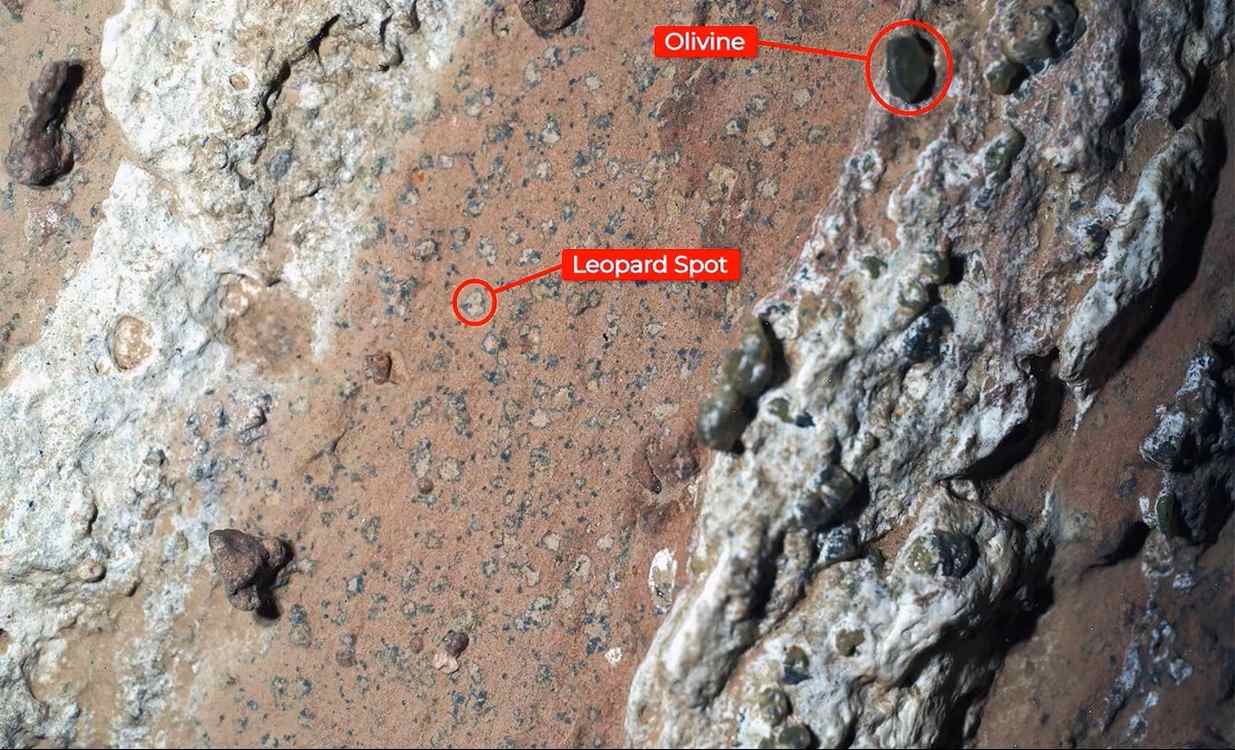
The discovery has sent ripples of excitement through the scientific community. Acting NASA Administrator Sean Duffy described the find as "the closest we have ever come to discovering life on Mars." The significance lies in the minerals themselves. Greigite, often formed by bacteria in lake sediments or hydrothermal vents, is considered a potential catalyst for the origin of life due to its role in a fundamental metabolic process. Vivianite, a hydrated iron phosphate mineral, is commonly found in fossilized remains and even in human burial sites, a result of decomposition processes involving iron.
The sample, taken from the ancient river channel, showed a distinctive pattern: a ring of vivianite punctuated by greigite-rich cores, mirroring similar patterns observed in biologically-active sediments on Earth. This pattern suggests a biologically mediated formation of vivianite through extracellular electron transfer, another key metabolic pathway.
While this doesn't definitively prove past microbial life on Mars, it represents the most compelling evidence to date. The discovery extends the timeframe during which Mars may have been habitable to at least as far back as when the Neretva Vallis was a flowing river, a crucial piece of information for future research. The presence of such a strong biosignature within just six years of the Perseverance mission’s operation suggests that similar mineral evidence could be discovered in future samples, potentially yielding even more profound insights.
The next step for scientists involves determining whether the formation of greigite and vivianite requires biological processes, or if they can form abiotically. Identifying unique signatures for biologically versus abiotically formed minerals is key to unraveling the mystery. The answers to these questions could revolutionize our understanding of life beyond Earth and potentially confirm that Mars once harbored microbial life. This finding underscores the immense potential of further Martian exploration, motivating continued investigation into the planet's geological history and the possibility of past life.
---
Originally published at: https://www.goodnewsnetwork.org/groundbreaking-nasa-discovery-is-closest-we-have-ever-come-to-finding-life-on-mars/


